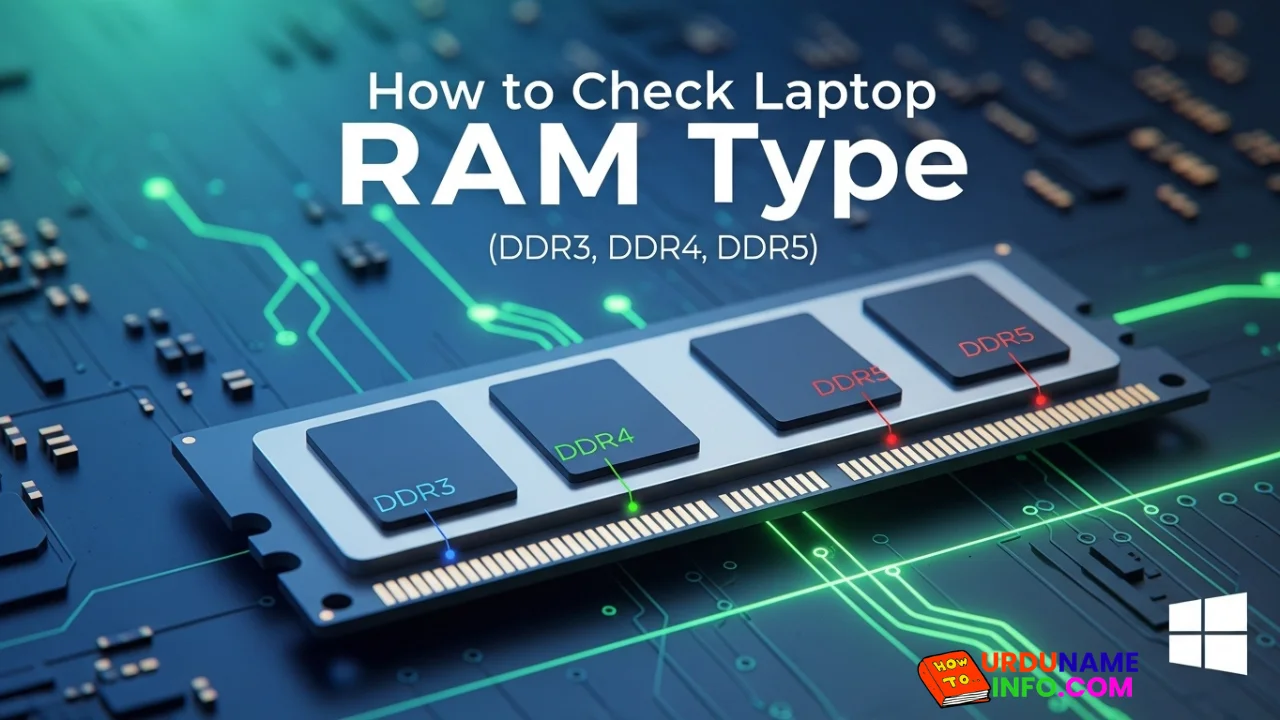
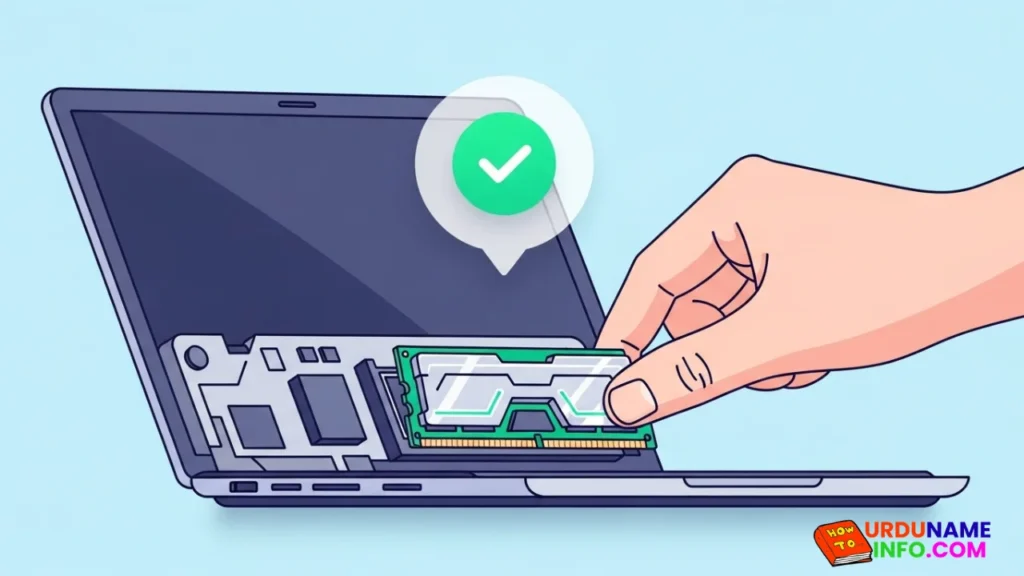
If you are planning to upgrade your laptop’s memory, the first thing you need to know is your RAM type. Buying the wrong RAM (like DDR4 instead of DDR5) can waste money and not work in your system.
The good news is that you don’t need to open your laptop to check this. Windows provides simple ways to find your RAM details safely.
Let’s go step by step.
Method 1: Check RAM Details Using Task Manager
The easiest way to check basic RAM information is through Task Manager.
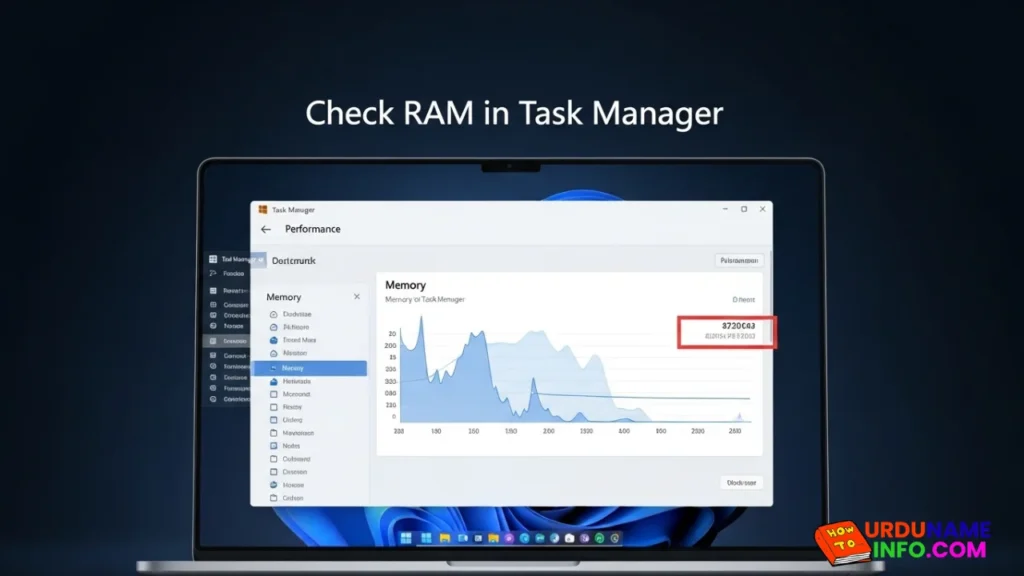
Open Task Manager and go to the Performance tab. Click on Memory. Here you can see how much RAM is installed, its speed (like 2666 MHz or 3200 MHz), and how many slots are used.
However, Task Manager usually does not directly show DDR type (DDR3, DDR4, DDR5). For that, you may need a more detailed method.
Read More: How to Fix Laptop Screen Flickering in Windows
Method 2: Use Command Prompt (More Accurate)
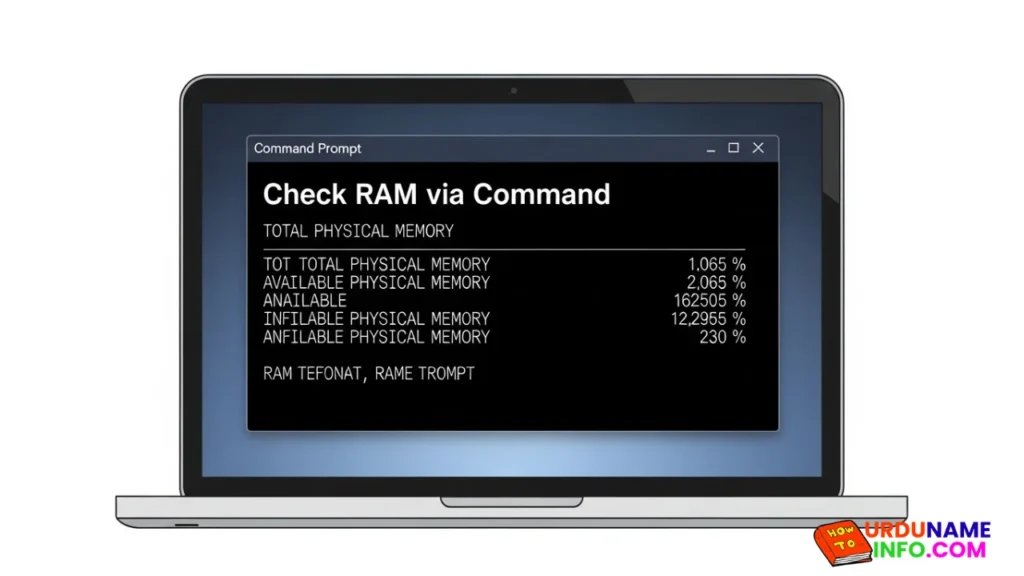
Windows Command Prompt allows you to get detailed RAM information.
By running a simple command, you can view memory details such as capacity, speed, and memory type. You can then match the memory type number with the DDR generation.
This method is safe and does not require installing any software.
Method 3: Use System Information Tool
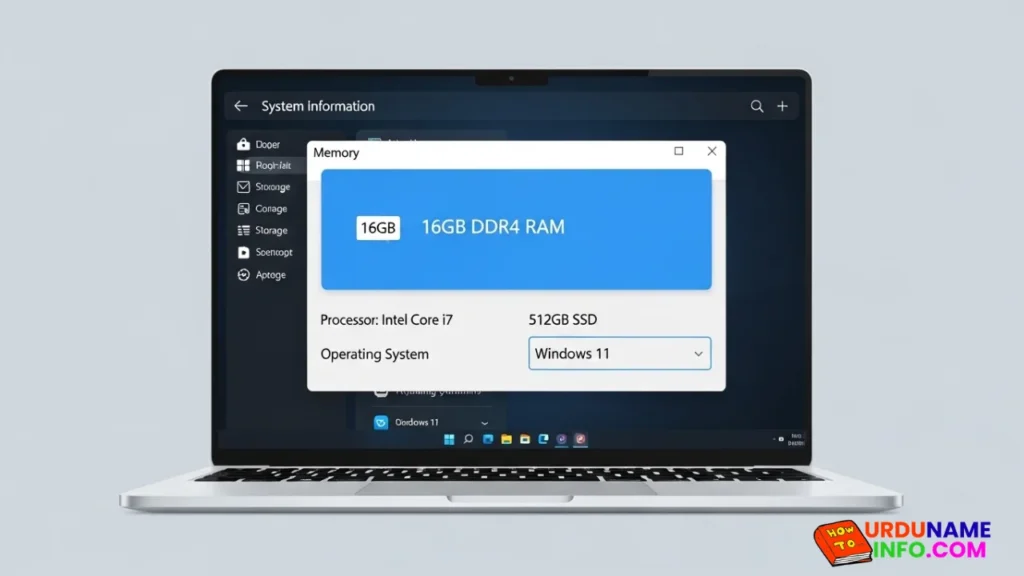
Windows also includes a built-in System Information tool. It shows detailed hardware data, including memory specifications.
Although it may not clearly mention the DDR type in all systems, it provides useful technical information for upgrades.
How to Identify DDR3, DDR4, or DDR5
If Windows does not clearly mention the DDR type, you can:
- Check your laptop model online on the manufacturer’s website
- Compare RAM speed (for example, DDR4 usually ranges between 2133–3200 MHz)
- Use trusted hardware information tools if needed
Knowing the exact DDR type is important before upgrading.
Why Knowing Your RAM Type Matters
Installing the wrong RAM type will not work in your laptop. Each DDR generation has a different design and slot compatibility.
Checking RAM type helps you:
- Avoid compatibility issues
- Upgrade safely
- Improve laptop performance correctly
Conclusion
Checking your laptop RAM type in Windows is simple and does not require opening the device. Using Task Manager, Command Prompt, or System Information can help you gather the details you need.
Before buying new RAM, always double-check compatibility to avoid mistakes. A correct RAM upgrade can significantly improve your laptop’s speed and performance.
Author

netpub60@gmail.com
Related Posts
How to Fix Laptop Screen Flickering in Windows
Laptop screen flickering is a common issue in Windows 10 and Windows 11. The screen may blink, flash, or refresh continuously, making...
Read out all
How to Check Internet Speed on Laptop Without App
If your internet feels slow while browsing, streaming, or downloading files, the first thing you should do is check your internet speed....
Read out all
Common Laptop Mistakes That Reduce Performance
Many people think a slow laptop means old hardware or the need for a new device. In reality, laptops often slow down...
Read out all
How to Fix USB Device Not Recognized Error
Seeing the message “USB Device Not Recognized” can be annoying, especially when you urgently need to access a flash drive, keyboard, mouse,...
Read out all
Difference Between SSD and HDD for Beginners
If you are new to computers, terms like SSD and HDD can sound confusing. Many people hear that SSD is “faster” and...
Read out all
Why Laptop Is Slow After Windows Update
Many users notice that their laptop becomes slow right after installing a Windows update. Apps take longer to open, startup feels delayed,...
Read out all